
Summary
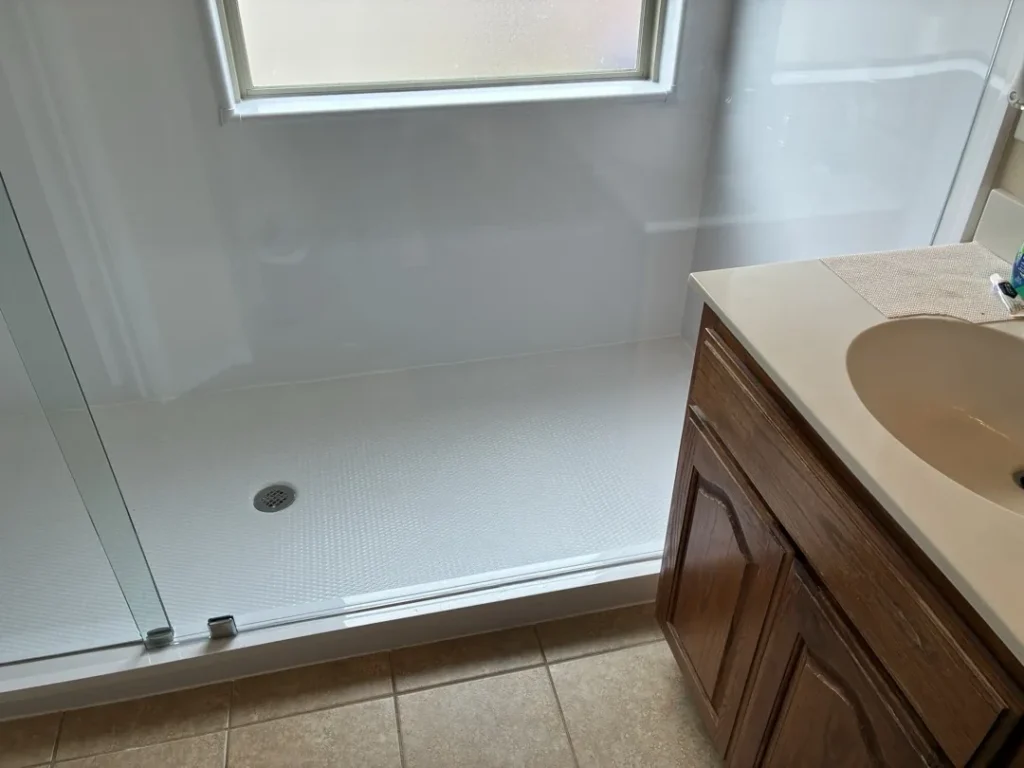
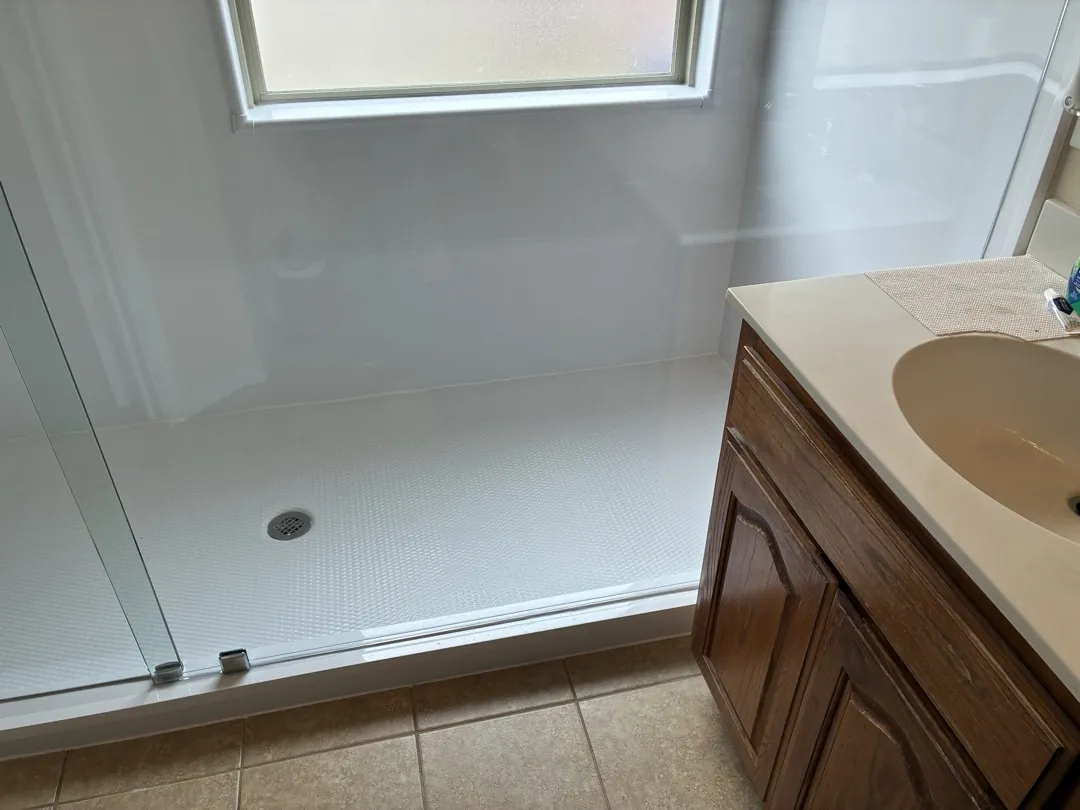
- A tub came out in 26% of bathroom renovations in the 2026 Houzz study, but a standard conversion keeps the tub’s footprint. A bigger shower is a bigger project.
- The shower is where 60 to 70% of a bathroom remodel’s money goes. Bath Fitter conversions run $8,500 to $17,000, and most land in the middle.
- The lowest quote can grow once the tub comes out. Our price already includes repairing non-structural rot and water damage in the wet area, and structural damage is rare.
- Ask whether the company makes what it installs. Dealer warranties often hand you off to a supplier.
- Converting a tub rarely hurts resale if the house keeps a tub somewhere. If it’s your only tub and you’re selling soon, talk to a local agent first.
In this guide
Expert contributor: Cameron “Cam” Young, Sales Manager for Columbia and Augusta. His quotes come from Episode 1 of our Bath Fitter Fam podcast.
Thinking about a tub-to-shower conversion, pulling out the tub and putting in a walk-in shower? Already got a quote or two and wondering why the numbers are so far apart?
We hear both questions every week, from Hot Springs and Little Rock to Memphis, the Tri-Cities and Oklahoma City. Since Louie Mullikin opened our family’s first Bath Fitter office in 2003, our teams have walked thousands of families through this exact decision. Some of them we’ve told to keep the tub. A few we’ve told to call a plumber or a foundation crew first.
Most articles about tub-to-shower conversions cover the basics: what it is, how long it takes, what it costs. Our tub-to-shower conversion guide does that too. This one is different. Here are the eight things homeowners tell us they wish someone had said before they signed anything, with fresh 2026 numbers and a few things salespeople usually leave out, our own included.
1. Are other homeowners really getting rid of their tubs?
Yes, and the numbers moved fast this year. In the 2026 U.S. Houzz Bathroom Trends Study (1,619 homeowners, published September 30, 2026), a bathtub came out in 26% of bathroom renovations. When it did, 79% of those homeowners used the space to make the shower bigger.
Two other numbers from the same study tell the story:
- Enlarging the shower showed up in 49% of renovations, up 10 points from last year.
- Shower-over-tub combos, the setup most of our customers start with, fell to 5% of upgraded showers.
Here’s the part nobody mentions. A standard conversion uses the same footprint your tub used, usually a 60-inch alcove. Your shower gets easier to use and feels bigger because the tub wall is gone, but it doesn’t grow past the walls that are already there. If you want a shower that takes over a closet or the space where the vanity sits, that’s a bigger remodel with framing, a plumber and probably a general contractor. Know which one you’re shopping for before you compare quotes.
2. Why is the shower the most expensive part of a bathroom?
Because it’s where the water, the plumbing and the skilled labor all meet. On Episode 1 of our podcast, William Mullikin and Cameron “Cam” Young, a sales manager for our Columbia and Augusta markets, walked through a national mid-range bathroom remodel line by line. Their take: the toilet, vanity, lights and floor are jobs a handy homeowner or a Facebook Marketplace pro can tackle. The shower is where 60 to 70% of the money goes.
“Your focus isn’t on your vanity. You can go buy a toilet. Toilets are a dime a dozen. But your shower is the most important space in there.”
Bath Fitter Fam Podcast, Ep. 1 (William Mullikin and Cam Young)
The Houzz numbers point the same way. In the 2026 study, the national median for a major bathroom remodel, meaning one where at least the shower was upgraded, reached $25,000. The median across all bathroom projects was $15,000.
A tub-to-shower conversion focuses the budget on that one area. Bath Fitter conversions run $8,500 to $17,000 in our markets in 2026, and William’s ballpark is that about 70% of customers land somewhere in the middle of $8,500 to $15,000.
3. Is the lowest quote usually the final price?
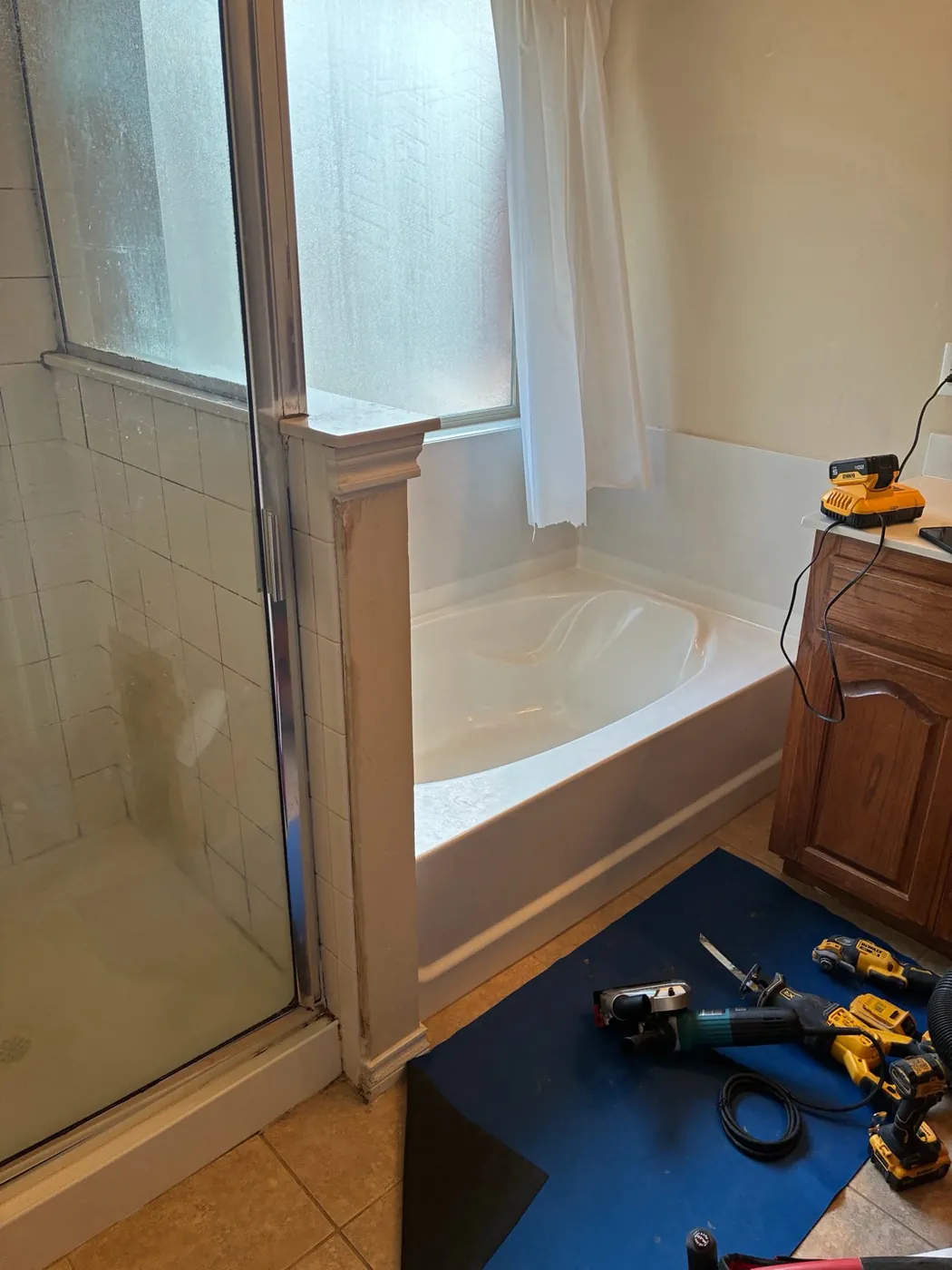
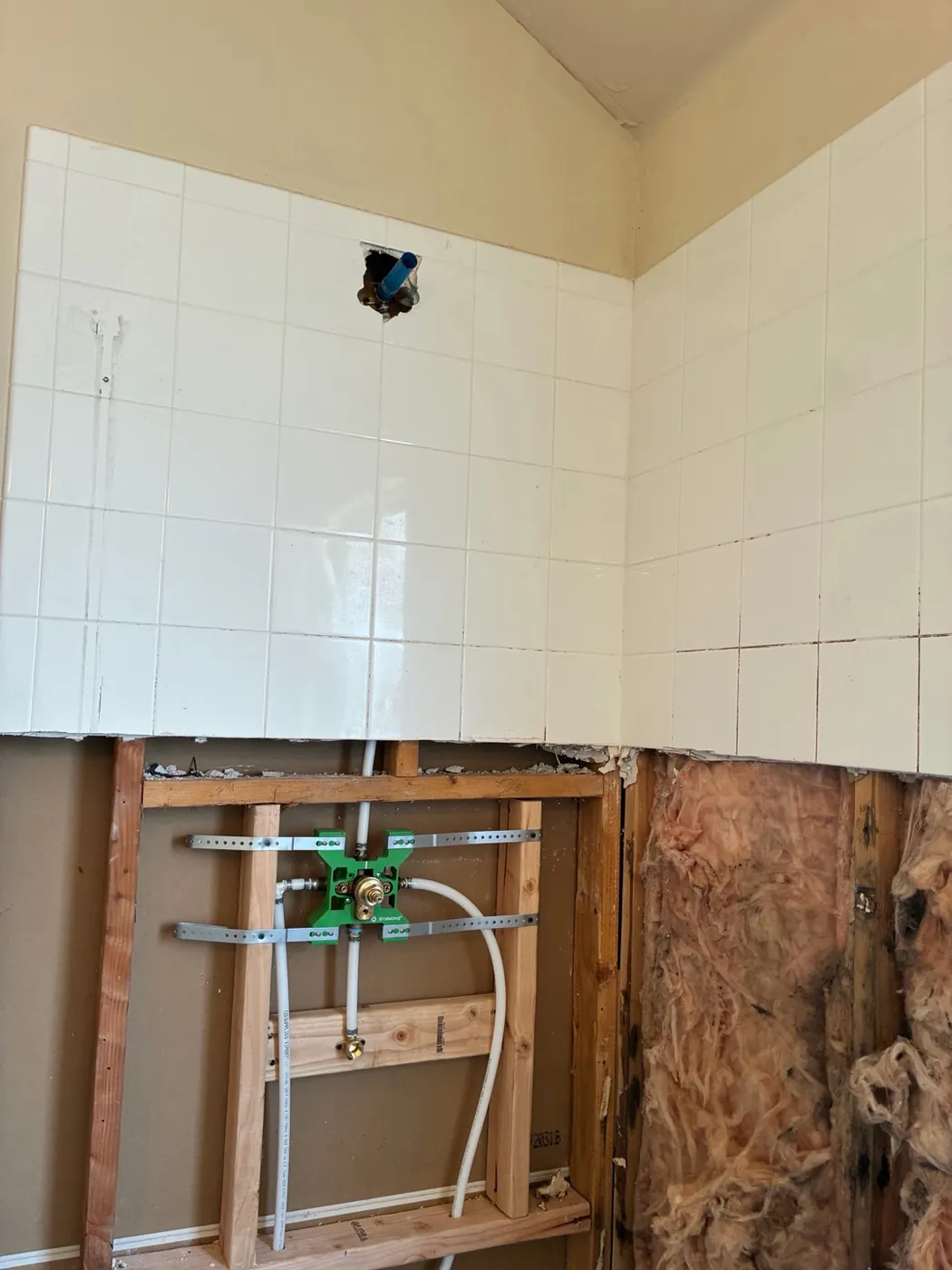
Often it isn’t, and the usual reason is what’s behind the tub. Nobody can see the subfloor or the bottom of the studs until the tub comes out. A fiberglass tub that’s been leaking for years can look perfectly fine from the outside.
Cam has been in this industry about six years and in a lot of homes. He’s heard this story more times than he can count:
“They start work and they stop and go, ‘Hey, Will, sorry man. I’m going to have to run down to Lowe’s and pick up some more material. It’s going to be an extra $500 now.’ So where you started is not where you’re going to finish a lot of times.”
Cam Young, Sales Manager, Bath Fitter Fam Podcast, Ep. 1
So when you compare quotes, compare what happens on the bad day. Ask each company, in writing: if you find rot or water damage when the tub comes out, what does that cost me?
At our Bath Fitter locations, rot repair in the wet area IS included.
Our answer is already in the price. A Bath Fitter quote includes repairing dry rot and water damage in the wet area, meaning the subfloor, studs and framing around and under the old tub, as long as the damage isn’t structural. And it almost never is. Rotted floor joists or a failing foundation are the kind of thing our crews have run into only a handful of times. When it does happen, that’s a separate project, and we’ll show you what we found before anything goes further.
That’s been our family’s rule since Louie opened the first office in 2003: if it’s in the wet area and it needs fixing, we fix it. More on what we find back there in what’s hiding behind your old tub.
4. Does “lifetime warranty” mean the same thing at every company?
No. This is the one we’d circle in red. A lot of companies in this industry are dealers. They buy walls and bases from a supplier, install them, and give you their own warranty for a year or five. After that, any claim goes back to the supplier, a company you’ve never talked to.
Cam explains it with a refrigerator:
“You buy an LG refrigerator from Best Buy. Best Buy says you’re getting a warranty from Best Buy, but normally that lasts for one year. And then after that one year, any issues, you then revert back to LG.”
Cam Young, Sales Manager, Bath Fitter Fam Podcast, Ep. 1
The fix is one question: do you manufacture what you install, or buy it from a supplier? Bath Fitter makes the walls and bases, ships them, and our own employees install and service them. There’s no supplier to point fingers at, so when something needs attention, you call us.
Our walls are also one piece, with the corners heat-bent into the panel, so there’s no corner seam held together by silicone. Seams are where water finds its way behind a wall. The details on coverage are in our lifetime warranty explainer.
5. What could be hiding in the wall above your tub?
Anything. That’s not an exaggeration. Many older tubs and fiberglass units have a boxed-in soffit above them or a molded corner seat, and builders use those spaces to hide whatever needed to go somewhere. Here’s some of what our crews have found when those walls open up, a few of which William and Cam swapped stories about on the podcast:
- Security system wiring running the full length of the wall
- Satellite cable
- Beer cans, magazines and Slim Jim wrappers from the original builders
- A gopher’s home. One crew pulled out an old tub and found the wall packed with dirt the gopher had hauled in, close to a whole tub’s worth.
Most of the time it’s a quick reroute or nothing at all. But it’s the reason we can’t promise a soffit comes out or a ceiling goes higher until we see what’s inside. If a company tells you yes to that on the first visit without opening anything, ask how they know.
6. Why does the step-over matter more than how the shower looks?
Because the tub wall is where people get hurt. A CDC study of emergency room visits estimated 234,094 nonfatal bathroom injuries among people 15 and older in one year. 81% were falls, and the highest injury rate was in or around the tub or shower, with injuries rising with age. It’s older data (2008), but the tub wall hasn’t gotten any shorter since.
A typical tub wall is well over a foot tall. Bath Fitter’s standard shower bases step in at about 3 or 6 inches. That one change is why a lot of our customers call. It isn’t about style. It’s Mom’s knee, or Dad’s balance, or wanting to stay in the house another ten years.
If that’s you, plan the seat and grab bars now, while the walls are open. Grab bar holes are permanent, so placement matters. Our aging-in-place shower guide walks through it.
7. Should you price a shower item by item?
Everybody asks what the door costs, what the seat costs, what the grab bars cost. It’s a fair question, and here’s the honest answer: most companies in this space, us included, price the shower as one package. William’s analogy is pizza:
“If I start adding in a different crust, and maybe want to stuff that crust with some cheese, and I want to start adding some veggies… the pizza is the same. You just started adding in all these extra things.”
William Mullikin, Bath Fitter Fam Podcast, Ep. 1
You’re in control of where the price lands. Glass doors, a seat, shelving, extra grab bars and a matte black finish push it up. White walls with chrome trim and a curtain keep it down. And timeless doesn’t mean cheap-looking: chrome and subway patterns have been around for a hundred years for a reason.
If you have a number you need to stay under, say it out loud at the start. A good consultant will build the shower around it instead of building it up and talking you down.
8. Will a tub-to-shower conversion hurt my home’s resale value?
Usually not, as long as the house still has a tub somewhere. That’s the rule of thumb most real estate agents give, and it’s the one we give too. Families with small kids often want at least one tub. If you’re converting the only tub in the house and plan to sell in the next few years, talk to a local agent before you decide.
If the conversion is in one bathroom and there’s still a tub down the hall, you’re in good company. In the 2026 Houzz study, 27% of homeowners said improving resale value was one of their reasons to renovate, and a tub came out in 26% of renovations. As we put it on Episode 1 of our podcast, kitchens and bathrooms are the first two places a buyer looks.
The bigger resale risk is usually a tired bathroom: a stained fiberglass surround, cracked grout, a soft spot in the floor. Nationally, a mid-range bathroom remodel recovered about 80% of its cost at resale in the 2025 Cost vs. Value Report. And a Bath Fitter lifetime warranty transfers to the next owner, which gives an agent one more thing to point to. Our walk-in shower vs. bathtub guide goes deeper on resale.
| Your situation | Resale risk of converting | What we’d suggest |
|---|---|---|
| Another tub elsewhere in the house | Low | Convert the one that’s hardest to use |
| Only tub, staying 5+ years | Low to moderate | Convert if it’s a safety or daily-use problem; get what works for you |
| Only tub, selling soon, family buyers likely | Higher | Talk to a local agent first, or update the tub instead |
What does a homeowner say after a complicated conversion?
Not every conversion is simple. Odd corners, old plumbing and out-of-level floors show up in new houses as often as old ones. Scott McAda in our Arkansas market had one of the tricky ones:
“Phil, the installer is very talented and did a fantastic job on a fairly complicated installation. I will use bath fitter again. Very pleased.”
Scott McAda, Little Rock market, Google review, November 2025
Quick comparison: what to check on any tub-to-shower quote
| What to check | Why it matters | What to ask | Our answer |
|---|---|---|---|
| Footprint | A conversion usually keeps the tub’s footprint; a bigger shower is a bigger project | Is this a same-footprint conversion or a layout change? | Same footprint, with a low step-in base |
| Hidden damage | The most common source of surprise charges | If you find rot, what does it cost me? | Non-structural rot repair in the wet area is included in the price |
| Warranty | Dealer warranties can hand you off to a supplier | Do you make what you install? | We manufacture, install and service it |
| Walls | Seams are where water finds a way in | One piece, or panels joined with silicone? | One-piece wall with heat-bent corners |
| Step-in height | The tub and shower area has the highest injury rate in the bathroom | How tall is the step into the new shower? | About 3 or 6 inches on standard bases |
| Price | Options move the number more than the base shower | What would bring this quote down? | $8,500 to $17,000; most land in the middle |
So is a tub-to-shower conversion worth it for you?
If nobody in the house takes baths, the step-over is getting harder, or you’re done scrubbing grout, it’s usually the best money you can put into a bathroom. If someone still loves a soak, or the house needs a plumber or a foundation repair first, wait. We’ll tell you that too. See what a bad fit for Bath Fitter looks like.
Want a number before anyone comes to the house? Get an Instant Estimate in a few minutes, or see local conversions in Oklahoma City, Columbia and Upstate SC and Western NC. Whoever you hire, make sure they do what they say they’re going to do.
Sources
Frequently asked questions
Can a tub-to-shower conversion make my shower bigger?
Usually not past the existing walls. A standard conversion uses the space your tub took up, most often a 60-inch alcove, so the shower feels bigger without the tub wall but keeps the same footprint. Taking over a closet or moving the vanity is a larger remodel with framing and plumbing changes.
Is it cheaper to buy a shower kit and have someone install it?
It can be. As William put it on our podcast, if you find a price in the $6,000 to $7,000 range, you’re in the ballpark of a big-box store kit with someone installing it on the weekend. That’s below our $8,500 starting point. The trade-offs are demolition and disposal, plumbing, leveling the base, what happens if they find damage, and who stands behind it later. Get those answers in writing before you compare prices.
Who actually installs a Bath Fitter conversion?
Our own employees. Bath Fitter manufactures the walls and bases, and our local teams install and service them, so there is no supplier or subcontractor to hand you off to if something needs attention later.
How can I tell if my old tub has been leaking?
Look for a soft or spongy floor near the tub, stains on the ceiling below, loose tile or caulk, and a musty smell that won’t go away. A fiberglass tub can hide a leak for years, which is why the real answer usually comes when the tub is removed.
Can I finance a tub-to-shower conversion?
Yes. Financing is available, and many of our customers use it. Your consultant can walk you through the current offers and terms during your visit, and our special offers page lists what is running now.
This guide applies to: Bath Fitter Arkansas, Bath Fitter Augusta, Bath Fitter Columbia, Bath Fitter Memphis, Bath Fitter Oklahoma, Bath Fitter Tri Cities, Bath Fitter Upstate SC/Western NC.