
Summary
- Check the exact fixture model and its rated water use.
- WaterSense certification applies to specific products, not every shower system.
- Keeping sound parts of a room can limit the scope, but damaged materials need appropriate work.
In this guide
You want to use less water, but do you need a bathroom remodel to do it? Often, the first step is much smaller: addressing a leak or checking the showerhead. A new wall finish may improve the room without changing water use at all.
Bath Fitter Fam helps homeowners choose fixtures and materials as part of tub and shower projects. Our experience is in planning and installing those bathing areas; for water-efficiency claims, we use the EPA’s published guidance and recommend checking the exact fixture model. A brand name alone does not establish a flow rating or certification.
This guide separates the choices that affect water use from those that affect upkeep, project scope and disposal. You’ll know what specifications to ask for and when a small upgrade may be enough.
Start with the showerhead’s actual specification
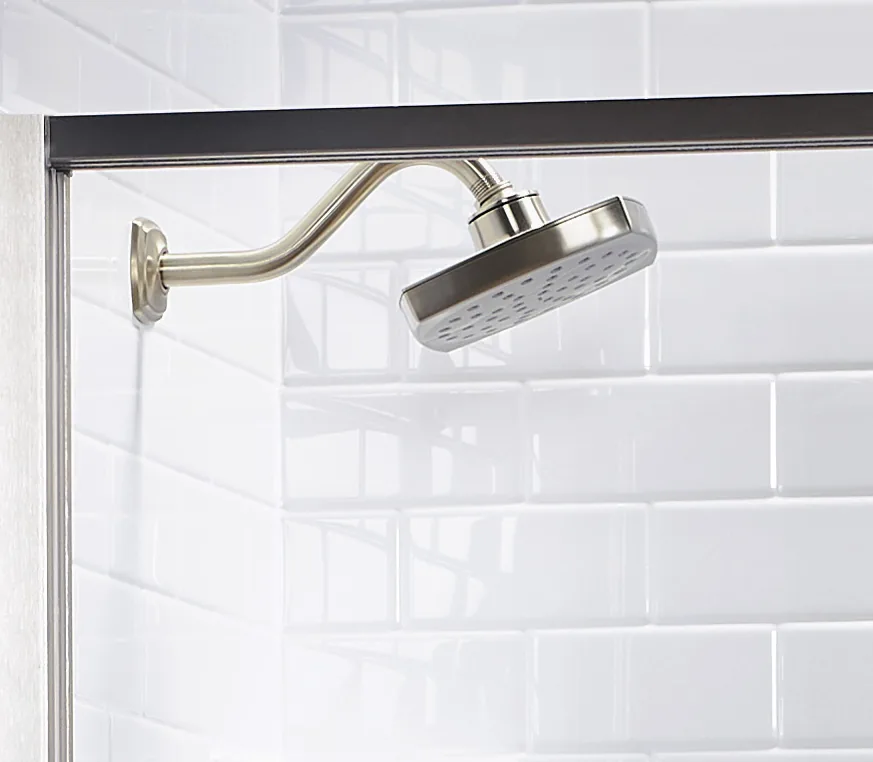
The EPA says standard showerheads use 2.5 gallons per minute; WaterSense-labeled models use no more than 2.0 gallons per minute and are independently certified for efficiency and performance. Check the EPA’s WaterSense showerhead guidance and verify the label on the exact model you are considering.
Ask about rated flow, spray settings and suitability for your plumbing. Do not assume every Bath Fitter fixture is WaterSense-certified, or that a particular showerhead is available for every design. A lower-flow model should still meet your household’s preferences and practical needs.
Understand what affects your actual use
A fixture’s flow rating is only part of the picture. Shower length, the number of users and how the controls are used also matter. A comparison based on a different household’s habits is not a guaranteed savings estimate for your home.
If water use is a priority, ask for the proposed model number before you agree to the project. Keep the product information so you can check care instructions and future replacement requirements.
Do not overlook maintenance and leaks
A dripping fixture or a plumbing issue should be addressed rather than treated as a reason to choose a new wall finish. Explain any leak, pressure or drainage concern during the assessment. The appropriate response depends on the cause.
A new shower does not automatically resolve every plumbing problem elsewhere in the room. Ask which repairs or adjustments are included and what would require separate work. That conversation can be more useful than adding another accessory.
Match the upgrade to the problem
| Your concern | Useful first step | What not to assume |
|---|---|---|
| Shower uses too much water | Check the existing and proposed showerhead flow ratings and your shower length | A new wall finish changes the fixture flow |
| A fixture drips | Have the cause assessed and the appropriate repair made | Replacing the whole bathing area is the only fix |
| The tub or walls are difficult to maintain | Compare materials, care requirements and the project scope | Easier cleaning proves a measured reduction in water use |
If the vanity, toilet, flooring and layout still work, ask what can stay. Keeping suitable parts limits replacement work, but it does not establish a water-savings figure. Confirm any necessary removal, repairs and disposal in the proposal. Our process guide explains how the bathing-area project is planned.
Choose materials you can maintain
Care requirements affect how a bathroom works over time. Compare wall surfaces, glass, fixtures and accessories together. A low-maintenance wall still needs regular care, and an enclosure has its own cleaning requirements.
Bath Fitter acrylic products and other components have specific care and warranty terms. Follow the instructions for the installed products instead of assuming a cleaner is safe because it is described as natural or gentle. See our warranty information and ask for the current product care guidance.
How much could a lower-flow showerhead change?
Using the rated flows above, a ten-minute shower at 2.5 gallons per minute uses 25 gallons; at 2.0 gallons per minute, it uses 20 gallons. That is a five-gallon difference for the same shower length. It is an illustration, not a prediction of your bill: your current fixture, water pressure and habits affect actual use.
If water use is the only thing you want to change and the bathing area is otherwise in good condition, ask whether a fixture upgrade is enough. A complete remodel should have a reason beyond a lower-flow showerhead.
Use these questions to compare proposals
- What is the exact showerhead model and rated flow?
- Does that specific model carry the WaterSense label?
- Which existing parts remain, and are they suitable to keep?
- What removal, repairs and disposal are included?
- Which care products and routines are recommended?
- Which savings claims are measured, and which depend on my household’s use?
Browse fixtures and accessory options and service price ranges, then discuss the priorities with your local team. You can make practical choices without needing a blanket sustainability promise.
Sources
Frequently asked questions
Will a new 2.0-gallon-per-minute showerhead save water if mine already has that rating?
The equal ratings alone do not show a reduction. Check the actual models and how you use them. A different spray pattern may change the experience, but it is not proof of lower water use at the same rated flow and shower length.
Does a handheld showerhead automatically use less water?
No. Handheld describes how the fixture is used, not its efficiency rating. Check the exact model, rated flow and any WaterSense label. Compare those specifications with your current fixture instead of assuming the handheld format saves water.
What should I check if the fixed and handheld heads can run together?
Ask for the system's overall flow when both outlets run and how the valve or diverter controls them. Do not apply the rating of one showerhead to the entire combined arrangement. Check the exact product specifications before making a savings claim.
This guide applies to: Bath Fitter Augusta, Bath Fitter Columbia, Bath Fitter Little Rock, Bath Fitter Memphis, Bath Fitter Oklahoma City, Bath Fitter Tri Cities, Bath Fitter Upstate SC/Western NC.