
Summary
- Use a cleaner from Bath Fitter’s approved list. Our team’s first pick is Clorox Clean-Up with bleach.
- The written rule: rinse any cleaner off right away. Don’t let it soak or dry on the surface.
- A weekly clean takes about five minutes: rinse, spray, wipe with a soft cloth, rinse, squeegee.
- Skip scouring powder, steel wool, scrub pads, straight bleach soaks and chemical drain cleaners.
- Hard water and soap scum cause most “stains.” Approved descalers like CLR PRO or white vinegar handle them.
- If the silicone stays dark or pulls away, or you find a scratch, call us. Both are normal service items.
In this guide
Expert contributors: Aaron Bishop, Operations Manager for Columbia and Augusta, and Kell Chapman, Operations Manager for the Upstate SC and Western NC. Their quotes come from interviews on our Bath Fitter Fam podcast.
“What can I clean this with?” It’s one of the last questions our installers hear before they pack up the truck, and one of the first ones people call back about. Since Louie Mullikin opened our family’s first Bath Fitter office in 2003, our teams across seven markets have cleaned, serviced and checked in on thousands of acrylic showers, including plenty that have been in place for 20 years or more.
Maybe you just had a new shower put in and you don’t want to be the one who ruins it. Or maybe you bought a house with an acrylic shower, it’s looking a little dull, and you have no idea what’s safe to use on it.
Either way, we’ve got you. Below is what Bath Fitter’s written care guide says, what our own team does at home, what to keep away from acrylic, and how to handle the stubborn stuff like hard water and soap scum. We’ll also tell you when a cleaning problem isn’t really a cleaning problem, and it’s time to pick up the phone.
Why does acrylic need different cleaning than tile or a cast iron tub?
Most of us learned to clean a bathroom on porcelain enamel or tile. A cast iron or steel tub has a hard, glassy enamel coating. Glazed tile is hard too, and the grout between it is porous, which is why it needs sealing. Those surfaces can take a scouring powder and a stiff brush, so a lot of cleaning habits were built around scrubbing hard.
Acrylic works differently. It’s smooth and non-porous, so water and grime sit on top instead of soaking in, and there’s nothing to seal. That’s why it’s easy to keep clean. It’s also softer than enamel or glazed tile, so the old scrub-it-hard habits can dull or scratch it.
Aaron Bishop, who runs our Columbia and Augusta teams, had to unlearn a few of those habits himself:
“I had a cast tub, and the easiest way to clean that was bleach, right? Just fill it up halfway, dump a little bit of bleach in there, let it soak… And acrylic doesn’t need bleach. It just does not need that.”
Aaron Bishop · Operations Manager, Columbia and Augusta
One thing to clear up, because it confuses people: Aaron’s talking about soaking and scrubbing with straight bleach, the way you might treat an old cast iron tub. That’s a bad idea on acrylic. A bleach-based bathroom cleaner from Bath Fitter’s approved list, sprayed on and rinsed off, is a different thing. In fact, it’s what our team recommends first.
What does Bath Fitter’s care guide actually say?
Bath Fitter publishes a list of authorized household cleaning products for its acrylic tubs and walls. The current version is dated July 1, 2026, and covers 117 products, from everyday names like Clorox, Lysol and Formula 409 to plain white vinegar. We put the whole thing, sorted by job, in our guide to the best cleaners for an acrylic shower.
Every page of that list ends with the same rule, and it matters more than which brand you buy:
“Always rinse any cleaning product off the tub and wall surfaces immediately. Cleaners should not be allowed to remain on the acrylic surfaces for any length of time.”
Bath Fitter, List of Authorized Household Cleaning Products (July 2026)
The guide also says harsh scrubbing and long soaks aren’t necessary, and it warns against harsh chemicals and chemical drain cleaners. In plain English: use a product from the list, rinse it off, and let the cleaner do the work instead of your elbow.
This isn’t just a suggestion. Bath Fitter’s written lifetime warranty asks owners to use only cleaners from the approved list, because harsh chemicals, abrasives and hard scrubbing are the main way acrylic gets damaged. Sticking to the list is the easiest way to keep your shower looking new.
There’s a good reason this list comes straight from Bath Fitter. Bath Fitter makes the acrylic, so the company that knows how the material holds up is the one deciding what goes on it. Our own employees install and service every shower we put in, so if something on yours ever looks off, there’s one number to call and no supplier to point fingers at. Our guide to how our lifetime warranty works explains what happens when you call.
What’s the best way to clean an acrylic shower each week?
This is the routine we’d give a family member. It takes about five minutes.
- Rinse first. Run warm water over the walls and base with your handheld or showerhead to loosen anything sitting on the surface.
- Spray an approved cleaner. Our team’s first pick is Clorox Clean-Up with bleach. Tilex Mold & Mildew, Scrub Free, Lysol’s bathroom cleaners and Simple Green are on the list too.
- Wipe with something soft. A microfiber cloth or a non-scratch sponge is plenty. Pay a little extra attention to the base, where your feet carry in dirt.
- Rinse well. Get the corners, the shelves and the soap dish, then the base, so no cleaner is left behind.
- Dry it off. A squeegee or an old towel keeps water spots and mildew from getting a head start. We usually leave a squeegee behind after an install. If yours didn’t, ask us for one.
Aaron’s advice is to make it a habit instead of a project:
“It’s a simple maintenance cycle of just investing that extra five minutes once a week to spray it down, or if you have a stain, not letting that stain sit and build up, just knocking it out.”
Aaron Bishop · Operations Manager, Columbia and Augusta
Should you let the cleaner sit, or rinse it right away?
Here’s where we’ll be straight with you. The written guide says rinse right away. Some of the people who know these showers best do it a little differently.
Aaron uses Tilex Mold & Mildew in his own shower: “I just spray mine with Tilex, let it sit for four or five minutes, and then I rinse it down.” And Kell Chapman, who runs our installs across the Upstate and Western North Carolina, hears something similar from customers who’ve had their showers since the early days:
“We spot clean it. We’ll spray it, let it sit for five, ten minutes, rinse it off. We never have to scrub it.”
Kell Chapman · Operations Manager, Upstate SC and Western NC
So what should you do? Start with what the guide and the product label say. If you’re fighting buildup and decide to give the cleaner a few minutes, stay nearby, don’t let it dry on the surface, and rinse it all off. Never leave a cleaner on overnight, and never fill the tub with cleaner to soak. Use your judgment, and if you’re not sure, call us. We’d much rather answer a question than fix a finish.
How do you get rid of hard water spots and soap scum?
These two cause most of the “I think my shower is stained” calls we get. Usually it isn’t a stain at all. It’s buildup, and it comes off.
Hard water. Minerals in the water dry into chalky white spots, especially around the fixtures and along the base. Aaron says the only real staining he’s seen is from hard water, which is a common issue in South Carolina, and plenty of homes in our other markets deal with it too. Approved options include CLR PRO Calcium, Lime & Rust Remover, Lime-A-Way, Simple Green Lime Scale Remover and plain white vinegar (5% or less). Bar Keepers Friend is on the list too, but only the spray foam, not the powder.
Soap scum. Bar soap and hard water together leave a dull film that builds up over months. Scrub Free soap scum remover and Lysol Power Bathroom are both on the list. Kell keeps it simple:
“Because you take a shower long enough, you’re going to get soap scum, things of that nature. And if it looks a little dull, just a little 409 on there.”
Kell Chapman · Operations Manager, Upstate SC and Western NC
The soap dish. If one spot gives you trouble, it’ll probably be the little grooves where a wet bar of soap sits. Aaron says getting that soap residue off “is more than it takes to clean the entire shower.” His trick: spray the soap dish right after you get out, then rinse it once you’re dressed. A pump of body wash instead of a bar avoids the problem entirely.
What about mold and mildew?
Mildew isn’t really an acrylic problem. It’s a moisture problem, and it shows up on any surface that stays wet. Kell says it plainly:
“You gotta find a way to keep that area dry, whether it be a window, a fan, wiping it down, whatever you need to do… If water sits there, mildew is gonna grow.”
Kell Chapman · Operations Manager, Upstate SC and Western NC
The EPA’s guide to mold and moisture makes the same point: control the moisture and you control the mold. Run your bathroom fan during the shower and for 20 to 30 minutes after, crack a window if you have one, and squeegee the walls.
When mildew does show up, Tilex Mold & Mildew and Clorox Clean-Up are both on the approved list. On an acrylic shower, the first place you’ll usually see it is the silicone along the base and around the fixtures, because that’s the one spot with a little texture for moisture to hang onto. If the silicone stays dark after a good cleaning, or it’s pulling away from the wall, it may be time to reseal it. That’s a normal maintenance item and a quick visit. One Columbia-area homeowner had it done after years with her shower:
“This was a repair of chalking that separated from the wall. Repair looks great. I would recommend Bath Fitters. I have had the shower for years.”
Sandra D. · Columbia market · Google review, 2025
What should you never use on an acrylic shower?
Most damage we see comes from a handful of habits that work fine on other surfaces. Here’s the short version, with what to reach for instead.
| Skip this | Why | Use this instead |
|---|---|---|
| Scouring powder, steel wool, green scrub pads, stiff brushes | They scratch and dull acrylic, which is softer than enamel or tile | A microfiber cloth or non-scratch sponge |
| Straight bleach, or filling the tub to soak | Harsh chemicals left on the surface can damage the finish | A bleach-based cleaner from the list, like Clorox Clean-Up, rinsed right away |
| Chemical drain cleaners | The care guide specifically warns they can seriously damage acrylic | A plunger or drain snake, or a call to a plumber |
| Products that aren’t on the list | They haven’t been authorized for Bath Fitter acrylic | Check the full approved list first |
| Candles on the tub ledge | Heat can mark acrylic in a way it wouldn’t mark cast iron | Keep candles on a counter or shelf away from the walls and tub |
The candle one surprises people. Kell’s advice: “Candles are a no-no. You don’t want to be burning candles next to acrylic.” Bath crayons, bath bombs and hair dye can leave color behind too. Rinse them off soon after and they rarely cause a problem.
Can you scratch an acrylic shower, and what if you do?
You can, but normal life rarely does it. Aaron washes two dogs in his own shower, including one big one:
“I wash both my dogs in my shower. I haven’t had any issues as far as scratching. I was a little weary myself. I mean, you get a seventy pound lab inside of a bathtub.”
Aaron Bishop · Operations Manager, Columbia and Augusta
Scratches usually come from the abrasive tools in the table above, or from dropping something heavy. If you do get one, don’t try to sand it out yourself. Light surface scratches can usually be buffed out by our service team, so give us a call and we’ll take a look.
How do you clean the fixtures and glass door?
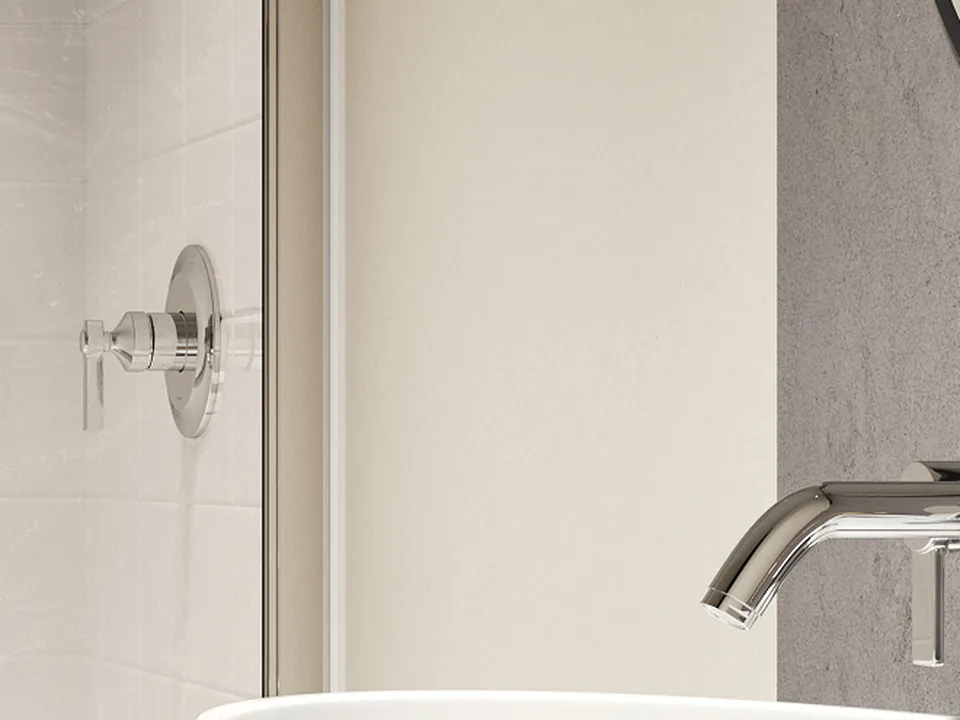
Your walls are acrylic, but your faucet, showerhead, grab bars and door aren’t, and they show water spots in their own way. One Tri-Cities homeowner was honest about it in her review:
“I am very happy with my new shower! The only problem was that I chose Brush nickel for my safety, rails and shower heads, It shows all the watermarks.”
Pat S. · Tri-Cities market · Bath Fitter customer review
A quick wipe of the metal with a dry towel after you shower is the easiest fix. For glass, Windex, Cinch and Hope’s Perfect Glass are all on the approved list, which matters because overspray lands on the acrylic too. A daily shower spray like Clean Shower or Method Daily Shower can also cut down on spots between real cleanings. If you’re still choosing finishes, ask your design consultant which ones hide water spots best in your home.
How do you keep an acrylic shower looking new for 20 years?
It mostly comes down to habits, not products. Kell sees it all the time when he visits longtime customers:
“I can’t tell you how many times I go into a home where it’s been in there for 20 years, and it looks like we just did it last week.”
Kell Chapman · Operations Manager, Upstate SC and Western NC
The opposite happens too. As William Mullikin put it on our podcast, “you can go into a job that we did a year ago, and it looks like it was done a hundred years ago, because people don’t take care of it.”
The difference is usually five minutes a week. Rinse after you clean, squeegee when you can, run the fan, and call us when the silicone starts to look tired. If you’re wondering how acrylic compares to tile on upkeep, our acrylic vs. tile guide covers it, and our acrylic shower walls guide explains what the material is and how long it lasts.
Every Bath Fitter tub and shower comes with a lifetime warranty, and if our name is on it, we do our best to make it right. Here’s how that works when you call. If something on yours doesn’t look right and cleaning isn’t fixing it, give us a call before you try anything drastic. Our contact page has every local number.
Still shopping for a new shower? You can get an Instant Estimate in a few minutes, or see our published pricing.
And if you’re ever standing in the cleaning aisle unsure about a bottle, give us a call or send us a picture. We’d much rather answer the question than fix the finish.
Sources
Frequently asked questions
Can I use a Magic Eraser on an acrylic shower?
Melamine sponges like Magic Eraser aren’t on Bath Fitter’s approved list. They work like very fine sandpaper, so they can dull acrylic over time. A microfiber cloth with an approved cleaner is the safer choice.
What if my favorite cleaner isn’t on the approved list?
It may not be harmful, but it hasn’t been authorized for Bath Fitter acrylic, and Bath Fitter’s written warranty asks owners to stick to the approved list. With 117 products to choose from, including several plant-based options, it’s an easy switch. See the full list in our guide to the best cleaners for an acrylic shower.
Will using the wrong cleaner void my warranty?
Bath Fitter’s written warranty asks owners to use only approved cleaners. Here’s how our family handles it: if our name is on your shower, we do our best to make it right, even if you can’t find the paperwork. If something doesn’t look right, call us and we’ll take a look. Sticking to the approved list just keeps you from needing that call.
Can I use a daily shower spray on acrylic?
Yes, as long as it’s on the approved list. Clean Shower Original, Method Daily Shower and Attitude Daily Shower are all approved, and Wet & Forget Shower is approved for weekly use. Rinse any buildup off during your regular weekly clean.
My acrylic shower is years old and looks dull. Can it be brought back?
Usually, yes. Dullness is almost always soap scum or a hard water film, not worn-out acrylic. Start with an approved soap scum remover or descaler and a soft cloth. If that doesn’t do it, call us and we’ll come take a look.
This guide applies to: Bath Fitter Augusta, Bath Fitter Columbia, Bath Fitter Little Rock, Bath Fitter Memphis, Bath Fitter Oklahoma City, Bath Fitter Tri Cities, Bath Fitter Upstate SC/Western NC.