
Summary
- Tile usually costs more, mostly because of labor. A typical Bath Fitter tub-to-shower conversion runs $8,500 to $15,000; the shower share of a national mid-range tile remodel is about $16,000 to $19,000.
- Acrylic is easier to clean because there's no grout. Shower grout is porous and needs resealing regularly.
- Tile wins on design range: real stone, custom layouts and specific designer tiles.
- Acrylic now comes in 12 tile-look patterns, molded into a one-piece wall with no grout lines.
- A tile shower often takes one to three weeks. A Bath Fitter install can take as little as one day.
In this guide
Expert contributors: Aaron Bishop, Operations Manager for Columbia and Augusta, and Kell Chapman, Operations Manager for the Upstate SC and Western NC. Their quotes come from interviews on our Bath Fitter Fam podcast.
“Should we just do tile?” Homeowners across our seven markets ask us that every week, usually right after scrolling through a few gorgeous tile showers on Pinterest. Since Louie Mullikin opened our family’s first Bath Fitter office in 2003, we’ve replaced a lot of tile showers. We’ve also told plenty of people to go hire a good tile setter, because for what they wanted, tile was the better call.
Maybe you love the look of tile but dread the grout. Or maybe you have tile right now, it’s cracked and stained, and you’re wondering if acrylic is a real upgrade or just a cheaper cover-up.
Both are fair. And if you’ve ever had a contractor promise one thing and deliver another, you deserve a straight answer before you spend a dime.
So here’s ours, including where tile wins. We’ll compare cost, cleaning, repairs, install time and looks, then tell you who should pick which.
What’s the real difference between an acrylic shower and a tile shower?
A tile shower is built in layers. A tile setter puts up cement board or another backer, adds a waterproofing layer, sets each tile by hand in thinset, and then fills every joint with grout. The tile itself sheds water well. The grout between the tiles is cement-based and porous, and the waterproofing layer behind it is what actually keeps your walls dry.
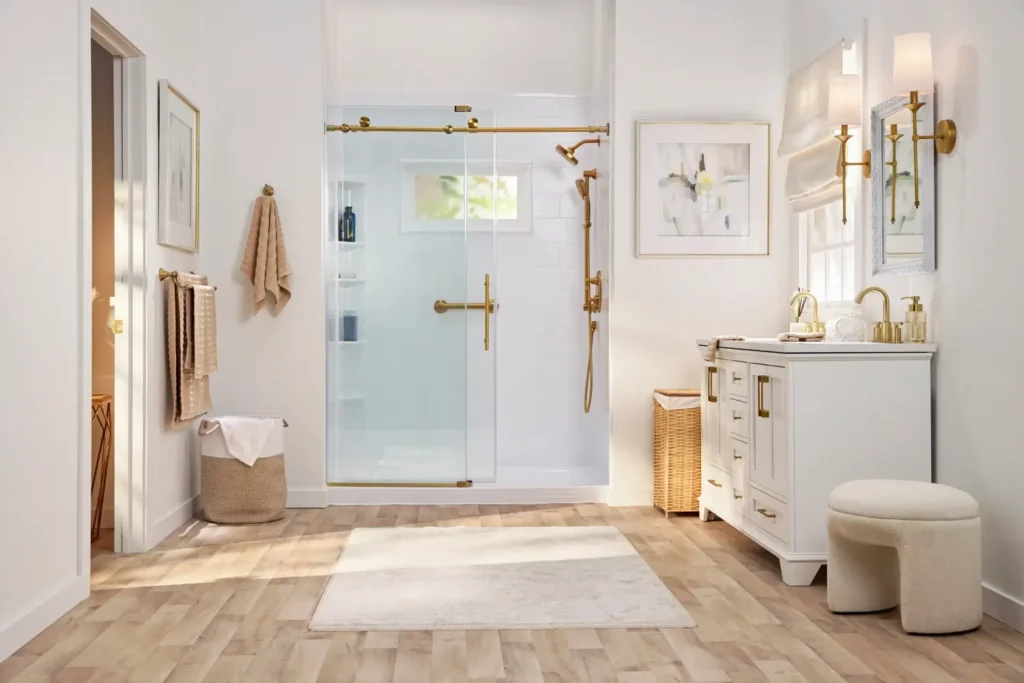
An acrylic shower comes from a factory. The wall is formed as a sheet, reinforced from behind, and cut to fit your bathroom. There’s no grout. The few joints, like the edges where the wall meets the base and the spots around your fixtures, get sealed with silicone.
With Bath Fitter, the company that makes the wall is the same one that installs it. Bath Fitter manufactures the walls and bases, and our own crews install them, so there’s no distributor in the middle and no question about who stands behind the job. Each wall goes in as one piece, custom-fit to your bathroom, so there are no joints across the wall where water can sneak behind it.
So the real trade looks like this: tile gives you nearly unlimited design choices and asks for upkeep. Acrylic gives you a narrower set of choices and asks for a lot less of your Saturday. If you want the deep dive on what acrylic is made of and how it holds up, our guide to acrylic shower walls, pros and cons covers it.
How much does an acrylic shower cost compared to tile?
Tile usually costs more, mostly because of labor. Every tile is placed by hand, and the job runs in stages with drying time in between. That’s a lot of skilled hours.
| What you’re comparing | Bath Fitter acrylic | Custom tile | DIY tile or panel kit |
|---|---|---|---|
| Upfront cost | $8,500 to $15,000 for a typical tub-to-shower conversion | About $16,000 to $19,000 for the shower share of a mid-range remodel | The lowest upfront cost, plus your time |
| Time without your shower | Usually just the install day | Often 1 to 3 weeks | As long as the project takes you |
| Weekly cleaning | Spray, rinse, squeegee | The same, plus scrubbing grout lines | Depends on the material |
| Ongoing upkeep | Keep an eye on the silicone joints | Reseal the grout, more than once a year in a shower | Varies with the kit and the install |
| If something gets damaged | Call us; covered by our lifetime warranty | Regrout, or replace tile that may no longer match | It’s on you |
| Design range | 12 tile-look patterns | Nearly unlimited | Limited to what the store carries |
| Best for | Easy upkeep and a fast install | Real stone and custom layouts | Handy homeowners with sound walls |
One thing the sticker price doesn’t show is the long-term cost. Tile asks for sealer, grout cleaner, and every so often a regrout or a cracked tile replaced. Acrylic mostly asks for a spray bottle and a squeegee. On our side, what moves the price is what you pick: a glass door, a seat, shelving, the hardware finish. Our Bath Fitter cost guide walks through it.
Which is easier to clean, acrylic or tile?
Acrylic, and it isn’t especially close. Most people don’t mind cleaning tile. It’s the grout that wears them out.
Aaron Bishop, who runs our Columbia and Augusta teams, loves the look of a tile shower himself. He also knows how it tends to go once you own one:
“The guy who’s walking looks at the guy on the bike and says, man, I really wish I had a bike, and the guy on the bike’s looking at the guy driving the car and says, man, I really wish I had a car. But if you ask the people who have a tiled shower… they hate cleaning it.”
Aaron Bishop · Operations Manager, Columbia and Augusta
Cement-based grout is porous, so water, soap and body oils soak in and discolor it. That’s why Bob Vila’s guide to sealing grout recommends refreshing the sealer about once a year on a dry floor and more often for grout in a shower. Skip that, and the grout lines are usually where mildew shows up first. The EPA’s guide to mold and moisture makes the bigger point: any surface that stays damp gives mold a chance, and grout stays damp longer than most.
That’s exactly what Randy A. in Spartanburg was living with before he called us:
“My Shower in our Master Bath was a Disaster!! Old white tile and grout that mildew grew on constantly.”
Randy A. · Spartanburg, SC · Google review, 2023
A one-piece acrylic wall has no grout lines at all. Water beads up and runs off, and a weekly spray with an approved cleaner and a rinse keeps it looking new. You still have to clean it. You just won’t need a grout brush.
Which holds up better over time, acrylic or tile?
Both can last decades when they’re installed well. They just fail in different ways.
Tile’s weak points:
- Grout breaks down. It cracks, crumbles or pulls away from the tile, and once it does, water can work its way toward the backer and the waterproofing behind it.
- A cracked tile is hard to match. Tile lines get discontinued and dye lots shift. Five years from now, the exact tile in your shower may not exist anymore, so one cracked piece can turn into a patch that never quite matches.
- It all depends on the installer. A tile shower is only as good as the waterproofing nobody can see once it’s done. A shortcut there can stay hidden for years until a ceiling stains in the room below. If you’ve ever had a contractor disappear halfway through a job, you already know why that matters.
Aaron has seen what that looks like years later: a patch of tiles around the plumbing “all a different color because they’ve been busted out and they had to fix some plumbing… That’s all they could find.”
Acrylic’s weak points:
- It can scratch. Acrylic is softer than glazed tile, so scouring powder and steel wool are off the table. Light surface scratches can usually be buffed out.
- Cheap acrylic cracks. Thin material, or a wall that wasn’t supported properly, flexes until it fails. Quality and installation matter as much here as they do with tile.
- The silicone joints need care. The sealed edges around the base and fixtures are the maintenance spots on an acrylic shower. They’re easy to keep up, and easy to redo if needed.
Every Bath Fitter tub and shower comes with a lifetime warranty. If something ever doesn’t look right, call us. We’d rather come take a look than have you live with it.
Does an acrylic shower look as good as tile?
Sometimes, yes. We’ll be the first to say it.
Where tile wins: range. If you want real marble, a handmade zellige, a mosaic floor, a custom niche in an exact spot, or a pattern nobody else on your street has, tile can do it and acrylic can’t. In a full luxury remodel where the shower is the showpiece, a great tile setter is worth the money. Kell Chapman, who runs our installs across the Upstate and Western North Carolina, says it plainly: “if you’re looking for something vibrant, obviously tile is going to give you the most variability.”
Where acrylic surprises people: how far it’s come. If you’re picturing a plain white plastic box from 1995, that’s old news. Our walls come in 12 tile-look patterns, from classic subway to a herringbone-style look called Lucca. The pattern is molded into the wall, so the “grout lines” are just texture, with nothing to scrub. The full list of patterns is in our acrylic shower walls guide, and if you’re curious which one would suit your bathroom, your design consultant can bring samples to the house.
Aaron puts the trade-off this way:
“It looks great on Pinterest… But who is going to be the person that’s going to get down there on their hands and knees and scrub those grout lines with a toothbrush, then let all that dry…? Or you can get a white marble wall with a tile pattern in it that doesn’t have any grout, and you still get that look.”
Aaron Bishop · Operations Manager, Columbia and Augusta
If you love the tile in the rest of your bathroom and only the shower is giving you grief, ask about our acrylic walls with stone inserts. They come in a couple of color options, and Aaron says they can get pretty close to the tile you already have, so the shower and the room still feel like they belong together.
And here’s something people don’t expect. Some of the nicest homes we work in already have beautiful tile showers. Kell sees it all the time:
“We go into a home, million dollars plus, and… it’s absolutely gorgeous, architectural, and then we go into the bathroom and we see beautiful tile, and they’re like, we want the acrylic over it.”
Kell Chapman · Operations Manager, Upstate SC and Western NC
His first reaction is usually “are you sure?” Then they talk through what the family needs now, and Kell sums it up like this: “tile served you at some point. Now it no longer serves you.” Kent J. had exactly that experience:
“We needed our custom tile shower replaced, and Bath Fitter was selected after looking at several options.”
Kent J. · Upstate SC/Western NC market · Google review, 2026
How long does an acrylic shower take to install compared to tile?
A tile shower is a sequence: demo, plumbing, backer board, waterproofing, setting tile, letting the thinset cure, grouting, and sealing. Several of those steps need drying time, which is why a tile shower often keeps a bathroom out of commission for one to three weeks.
Elizabeth W. lives in a 100-year-old farmhouse where, in her words, “no walls are square or floors are level.” She still got her shower back fast:
“Alex removed an old cast iron tub and tile walls and replaced it with a beautiful walk-in shower in one day.”
Elizabeth W. · Upstate SC/Western NC market · Google review, 2020
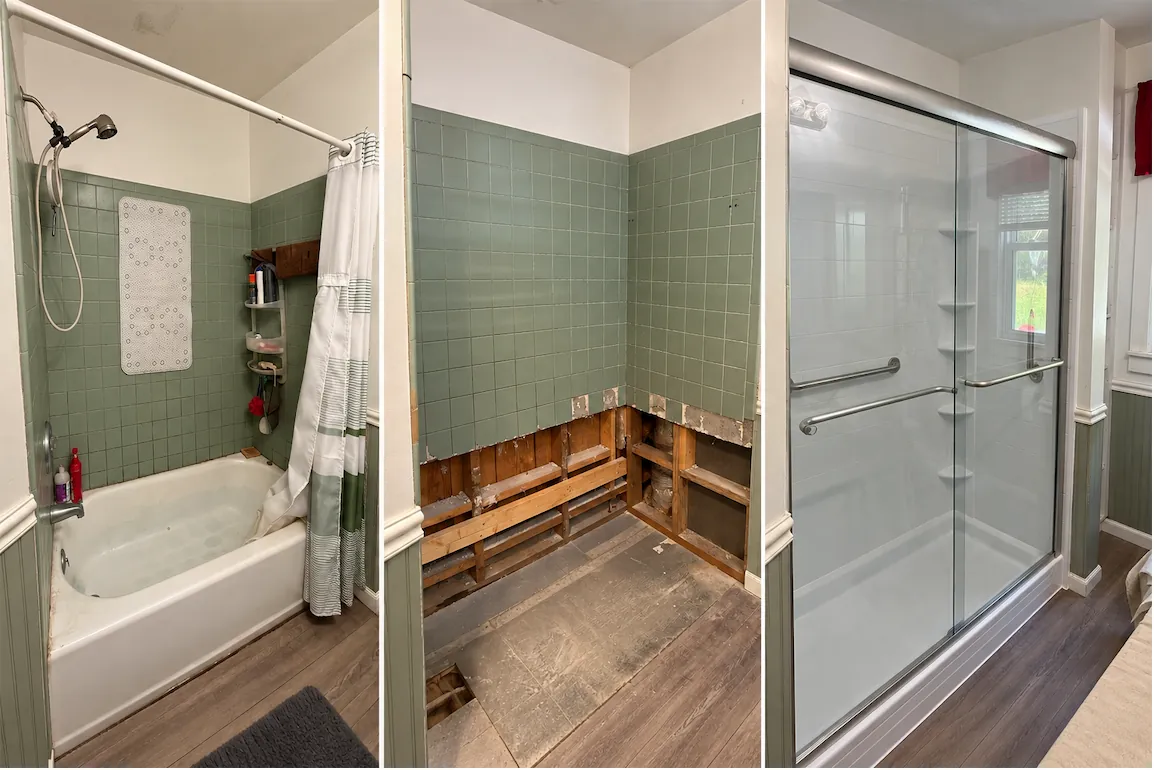
Our installations can take as little as one day, and some projects take longer, usually when we find damage behind the old walls that needs fixing first. If we find rot in the wet area, repairing it is included. Our article on whether a shower can really be remodeled in one day walks through what happens behind the scenes.
When should you choose tile instead of acrylic?
Here’s when we’d send you to a tile setter instead:
- You want a specific material. Real stone, a particular designer tile, or a handmade look. That’s a tile setter’s job, and we don’t set tile.
- The shower is the centerpiece of a full luxury remodel. If you’re moving walls and redoing the whole room anyway, custom tile fits that kind of project.
- You want a layout nobody else has. Curbless with a linear drain across the room, a bench built at an exact height, niches right where you want them. Custom tile can do all of it.
Go with acrylic if you want the tile look without the grout, your bathroom back quickly, and a lifetime warranty behind the work. That describes most of the families we meet, especially anyone planning ahead for easier access. Our guide to the best shower for aging in place covers that side.
So, should you choose acrylic or tile?
If the look of one specific tile matters more to you than anything else, choose tile, hire a great setter, and plan to reseal. If what you really want is a shower that looks like tile, cleans in a few minutes, and doesn’t keep your bathroom torn up for weeks, acrylic is usually the better fit.
If you’d like to see what yours would cost, get an Instant Estimate, or we can come out for a free in-home consultation and bring the pattern samples with us.
Whatever you decide, make sure whoever you hire does what they say they’re going to do.
We’d love to help. See our published pricing or explore Tub to Shower Conversion whenever you’re ready.
Sources
Frequently asked questions
How do I clean an acrylic shower without damaging it?
Use a soft cloth or sponge and a cleaner from Bath Fitter’s approved list. Our team’s first pick is Clorox Clean-Up with bleach. Spray, wipe and rinse it off right away. Skip scouring powder, abrasive pads and steel wool, and a quick squeegee after showers helps a lot. Our guide on how to clean an acrylic shower has the full routine.
Will acrylic walls match the tile in the rest of my bathroom?
They can coordinate nicely. With 12 tile-look patterns to choose from, your design consultant can bring samples so you can compare them against your floor and the rest of the room.
Is an acrylic shower waterproof?
The acrylic itself is non-porous, so water runs off instead of soaking in. The sealed silicone joints around the base and fixtures are the spots to keep an eye on, and they're easy to maintain.
Can I keep my tile floor and just replace the shower?
Yes. We focus on the tub and shower area, so your bathroom floor and the rest of the room usually stay as they are.
What happens if my acrylic shower gets scratched?
Light surface scratches can usually be buffed out. Skip scouring powder, abrasive pads and steel wool, and if something doesn't look right, give us a call.
This guide applies to: Bath Fitter Augusta, Bath Fitter Columbia, Bath Fitter Little Rock, Bath Fitter Memphis, Bath Fitter Oklahoma City, Bath Fitter Tri Cities, Bath Fitter Upstate SC/Western NC.